Revolutionizing Endodontic Care: How Virtual Consultations Are Transforming Patient Engagement and Clinical Efficiency
In recent years, the landscape of dental care has undergone a significant transformation, driven largely by advancements in digital health technologies. One of the most impactful innovations is the rise of virtual consultations, particularly within specialized fields like endodontics. These online sessions offer a convenient alternative to traditional in-person visits, enabling dentists to connect with patients remotely while delivering high-quality care.
The shift toward virtual consultations reflects broader changes in healthcare delivery models, emphasizing accessibility, efficiency, and personalized treatment options. For endodontists, who specialize in treating diseases of the tooth pulp and surrounding tissues, this evolution presents new opportunities to enhance diagnostic accuracy, streamline workflows, and expand their reach beyond physical clinic boundaries.
Understanding Virtual Consultations in Endodontic Practice
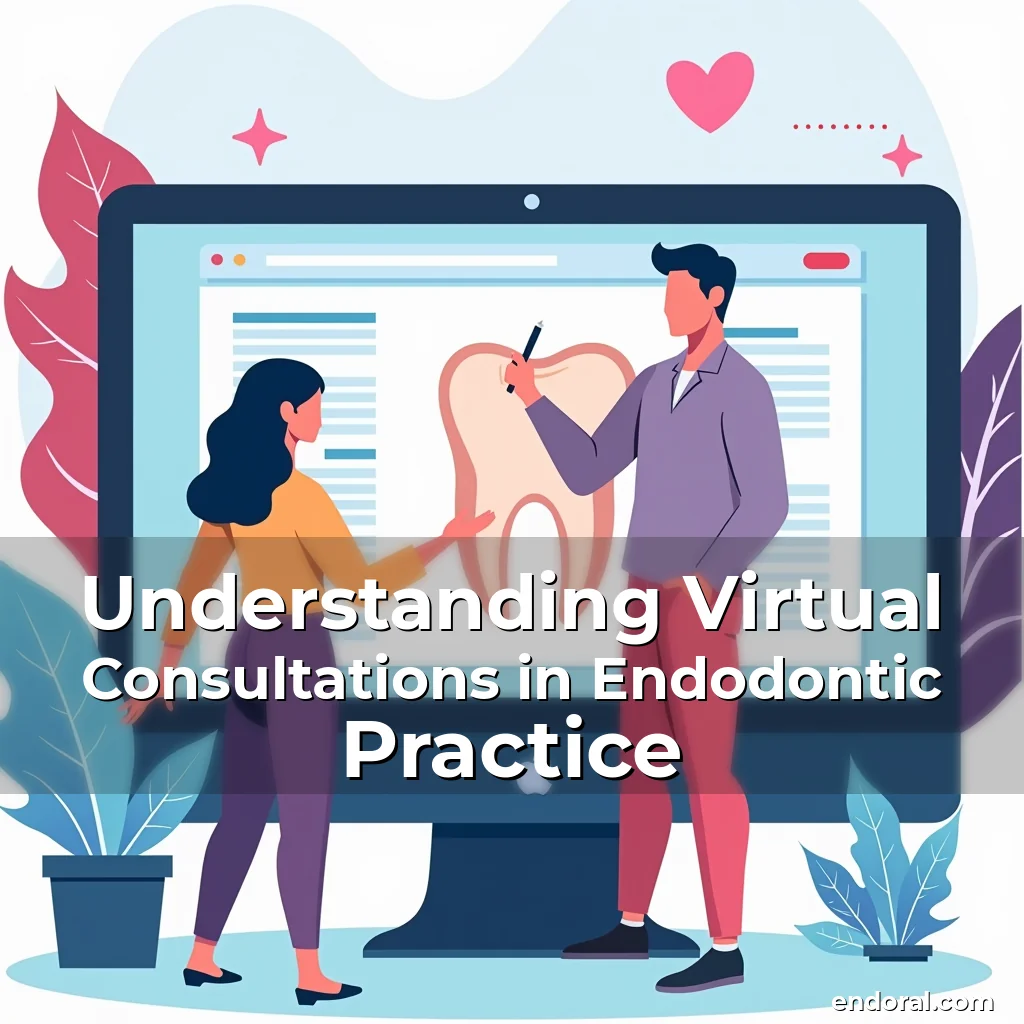
Virtual consultations refer to medical evaluations conducted via digital platforms, allowing patients to interact with healthcare providers from anywhere with internet access. In endodontics, this approach enables practitioners to assess symptoms, review radiographic images, and recommend treatment plans without requiring the patient to physically visit the office. This method is particularly beneficial for initial screenings or follow-ups involving non-emergency conditions.
These consultations typically involve secure video conferencing tools integrated with electronic health records (EHR) systems, ensuring seamless access to patient history and diagnostic data. Dentists can leverage features like screen sharing to walk patients through imaging results or demonstrate procedures visually. However, it’s important to note that complex treatments still necessitate in-office visits for hands-on interventions.
- Digital Imaging Integration: High-resolution intraoral cameras and cone-beam computed tomography (CBCT) scans can be shared securely during virtual sessions, providing accurate visual references for diagnosis.
- Patient Education Tools: Interactive software allows dentists to illustrate root canal anatomy or other procedures, enhancing patient understanding and informed decision-making.
- Remote Symptom Assessment: Through guided questionnaires and symptom checklists, endodontists can evaluate pain patterns, swelling duration, and other indicators relevant to diagnosing pulpal disease or periapical pathology.
Benefits of Implementing Virtual Consultations in Endodontics
The adoption of virtual consultations offers numerous advantages that align with modern healthcare priorities, including cost-effectiveness, environmental sustainability, and improved workflow management. By reducing unnecessary in-person visits, endodontists can optimize appointment scheduling while minimizing wait times for urgent cases.
Patients benefit from greater flexibility in accessing care, especially those living in rural areas or facing mobility challenges. Studies indicate that nearly 68% of patients report higher satisfaction levels when given the option to choose between virtual and in-person consultations, reflecting growing demand for hybrid service models.
Enhancing Diagnostic Accuracy Through Remote Evaluation
A 2022 clinical trial published in the Journal of Endodontics found that virtual consultations maintained comparable diagnostic accuracy to in-person exams for certain conditions, such as asymptomatic apical periodontitis detected via CBCT scans. This suggests that well-trained professionals can achieve reliable outcomes even without direct tactile examination.
However, limitations exist regarding the assessment of soft tissue abnormalities or oral motor function, which may require additional testing during subsequent visits. To mitigate this, many endodontic offices implement a tiered evaluation system where virtual consultations serve as triage tools rather than definitive diagnoses.
Navigating Challenges in Virtual Endodontic Consultations
While virtual consultations present many advantages, several challenges remain that practitioners must address to ensure optimal patient care. Technical issues such as poor connectivity, audio/video latency, or incompatible software can hinder effective communication and compromise diagnostic reliability.
Cultural resistance from older generations accustomed to conventional care models poses another barrier. Some patients express concerns about the impersonal nature of remote interactions, fearing that vital nuances in facial expressions or body language might be lost during virtual exchanges.
Educational Strategies for Successful Adoption
To overcome these hurdles, dental educators emphasize the importance of integrating telehealth competencies into graduate curricula. Programs now include modules on managing virtual emergencies, interpreting digital imagery, and building rapport through screen-based interactions. Simulation exercises help students practice navigating common technical difficulties during mock consultations.
Additionally, ongoing professional development workshops focus on refining skills related to empathetic communication over video calls. Research shows that subtle vocal inflections and deliberate pauses can convey warmth and attentiveness effectively, counteracting perceptions of distance inherent in virtual environments.
Leveraging Technology for Enhanced Patient Experience
Modern endodontic practices employ advanced technologies to elevate the virtual consultation experience, making it more intuitive and effective for both providers and patients. Augmented reality (AR) overlays allow dentists to project 3D reconstructions of affected teeth onto the patient’s viewport, facilitating clearer explanations of proposed treatments.
Artificial intelligence algorithms assist in analyzing patient-reported symptoms against extensive databases of clinical presentations, generating predictive risk scores for potential complications. When combined with real-time monitoring capabilities, these tools enable proactive intervention strategies tailored to individual needs.
Bridging Geographic Gaps with Tele-endodontology
Virtual consultations have emerged as powerful instruments for expanding access to specialty care, particularly in underserved regions lacking adequate endodontic resources. Rural populations often face long travel distances to reach specialist clinics, leading to delayed treatment initiation and worsened prognosis for conditions like necrotic pulps or acute abscesses.
Tele-endodontology initiatives partner with local general dentists who act as liaisons, conducting initial examinations and transmitting necessary data for remote consultation. This collaborative model reduces burden on referral centers while improving overall population health outcomes through timely interventions.
Regulatory Considerations and Compliance Standards
As with any healthcare service, virtual consultations must adhere to stringent regulatory frameworks designed to protect patient privacy and ensure safe practice standards. In the United States, compliance with Health Insurance Portability and Accountability Act (HIPAA) regulations remains paramount, governing how protected health information (PHI) is transmitted digitally.
Endodontic practices utilizing telehealth services must verify that chosen platforms meet federal security requirements, including encryption protocols for data transmission and storage. Regular audits and staff training programs reinforce adherence to legal obligations, mitigating risks associated with unauthorized access or data breaches.
Evolving Role of the Endodontist in a Digital Age
The increasing prevalence of virtual consultations necessitates redefining the role of endodontists within contemporary healthcare ecosystems. While core responsibilities remain focused on diagnosing and treating pulpal pathologies, there is now heightened emphasis on coordinating multidisciplinary care through digital collaboration networks.
This paradigm shift encourages endodontists to develop expertise in cross-disciplinary referrals, leveraging electronic health record systems to seamlessly share patient information with orthodontists, periodontists, and restorative specialists. Such integrative approaches foster holistic treatment planning aligned with individualized patient goals.
Future Directions and Innovations in Tele-endodontology
Ongoing research continues exploring ways to refine virtual consultation methodologies, aiming to bridge existing gaps between remote evaluation capabilities and traditional clinical excellence. Emerging trends suggest greater integration of wearable biosensors capable of continuously monitoring physiological parameters indicative of pulpal distress.
Immersive virtual reality environments are being tested as training tools for aspiring endodontists, offering simulated scenarios where trainees can practice differential diagnoses and procedural techniques in controlled settings. These innovations promise to further augment educational experiences while enhancing preparedness for diverse clinical situations.
Conclusion
The incorporation of virtual consultations represents a pivotal advancement in endodontic practice, reshaping how specialists engage with patients and manage clinical workflows. As demonstrated throughout this discussion, these digital solutions offer substantial benefits while presenting navigable challenges that continue to evolve alongside technological progress.
By staying abreast of emerging developments and prioritizing continuous education in telehealth modalities, endodontists can fully harness the potential of virtual consultations to deliver exceptional care that meets the evolving expectations of today’s patients. Embracing this transformation not only improves operational efficiencies but also strengthens the doctor-patient relationship in meaningful ways.